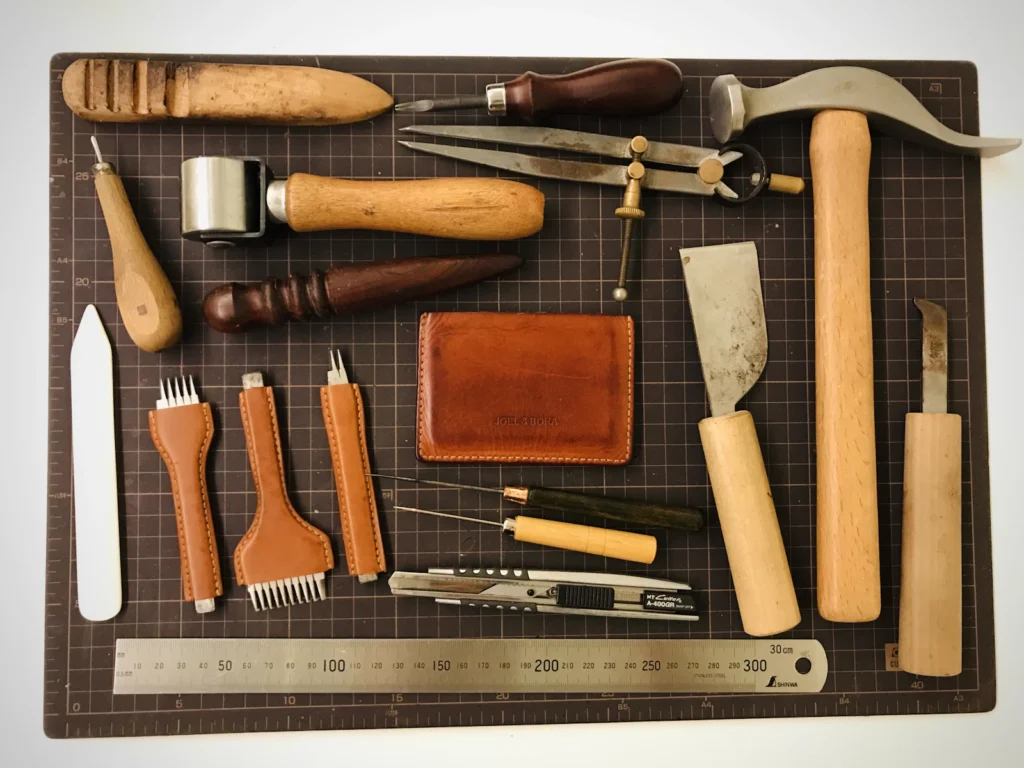
Quick answer: wipe a leather sheath or scabbard with a slightly damp cloth, let it dry naturally away from heat, and rub in a thin coat of leather conditioner or beeswax balm a few times a year. Above all, never store a blade in leather for long periods, especially if either is damp: leather holds moisture and chemicals from tanning that can rust and stain steel. Store the knife or sword beside its sheath instead.
A good leather sheath lasts as long as the blade it protects, often decades, if it is looked after. Neglected leather dries out, cracks, stretches or grows mould, and it can quietly ruin the steel inside it. A few minutes of care a few times a year prevent all of that.
Why leather needs care, and why blades rust in it
Leather is skin, and it contains natural oils that keep it supple. Rain, sweat, sun and heat slowly remove those oils, so the leather stiffens and cracks. Leather is also absorbent: it soaks up water from rain, blood or a wet blade and holds it against the steel for days. Some tanning processes leave salts and acids in the leather that react with carbon steel. This is why a perfectly good knife can come out of a sheath after a damp hunting trip with rust spots on it.
How to clean a leather sheath
- Empty it and brush off dirt, mud and sand with a soft brush.
- Wipe with a cloth dampened in clean water. For stubborn grime or dried blood, use a little saddle soap worked into a light lather, then wipe off the residue.
- Don’t soak it or put it in a washing machine.
- Dry slowly at room temperature, away from radiators, stoves, hair dryers and direct sun. Fast heat makes leather shrink, harden and crack.
- Clean inside with a dry cloth wrapped around a thin stick to remove grit, which can scratch blades.
Conditioning and waterproofing
Once the sheath is clean and completely dry, condition it:
- Leather conditioner or balm: rub a thin layer in with a soft cloth, let it soak in for a few hours, then buff off the excess.
- Beeswax-based balms add good water resistance, ideal for hunting in the wet climates of the Pacific Northwest, the UK and Scandinavia.
- Neatsfoot or mink oil softens leather well but can darken it and, used heavily, make it too soft to hold a knife securely. Use sparingly.
- Frequency: two to four times a year for regular use, or after any soaking.
Avoid conditioning the inside of a sheath heavily: excess oil collects grit and keeps the blade wet.
Fixing common problems
- Mould: wipe with a cloth dampened in a 50/50 mix of white vinegar and water, or diluted rubbing alcohol, then dry thoroughly and condition. Store somewhere drier.
- A loose fit: a sheath that has stretched can sometimes be tightened by dampening the leather slightly, inserting the knife wrapped in cling film, pressing the leather around it and letting it dry slowly. Practise on an old sheath first.
- A tight fit: leave the knife (wrapped in cling film) inside for a day or two to stretch it slightly.
- Loose stitching: fix it early with waxed thread, or take it to a leatherworker or saddler before the welt separates and the edge cuts through.
- Cracks: condition at once to stop them spreading. Deep cracks near the mouth mean the sheath should be replaced.
- Green or white bloom on brass fittings: clean with a little metal polish, keeping it off the leather.
Storing knives and swords
- For storage longer than a few days, keep the blade out of the sheath, cleaned and lightly oiled, with the sheath beside it.
- After a wet trip, dry the knife and let the sheath dry separately before putting them back together.
- Swords on display can stay in their scabbards if both are dry and the blade is oiled, but check them every few weeks. Our katana care guide explains the routine for long carbon steel blades.
- Keep everything in a room with stable temperature and low humidity; avoid garages, sheds and basements.
For the blades themselves, see the Damascus and carbon steel care guide and our article on patina vs rust.
Sheaths and scabbards with our blades
Every hunting knife we make comes with a leather sheath, and every sword comes with a leather scabbard. If you need something special, such as a different carry style or a decorated scabbard, it can be made on request.
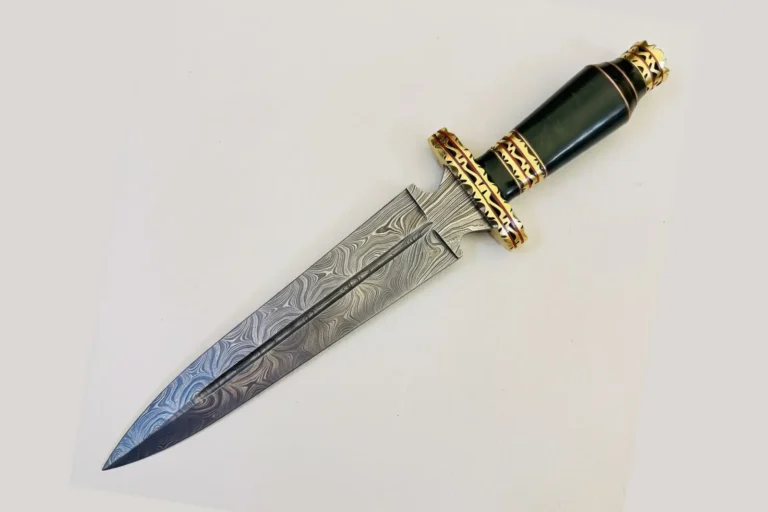
- SherDil Dagger Knife: a hand-forged Damascus dagger with a 9 in (23 cm) blade and a cow horn handle, 14 in (36 cm) overall, with a leather sheath.
- Medieval Kukri knife: a large Damascus kukri with a 10 in (25 cm) blade and a rosewood handle, 16 in (41 cm) overall, with a leather sheath.
- Medieval Sword: a Damascus medieval sword with a 30 in (76 cm) blade, 38 in (97 cm) overall, supplied with a leather scabbard.
Larger blades like the Medieval Kukri put more strain on the sheath’s stitching and mouth, so they benefit most from regular conditioning. Browse all hunting knives or swords.
Frequently asked questions
Should I store my knife in its leather sheath?
Not for long periods. Leather absorbs moisture and can contain tanning chemicals that cause rust and staining. Store the knife clean and oiled next to its sheath.
What is the best conditioner for a leather knife sheath?
A good leather balm or a beeswax-based conditioner works well and adds water resistance. Use oils such as neatsfoot sparingly so the sheath does not get too soft.
How do I dry a wet leather sheath?
Remove the knife, blot off excess water, and let the sheath dry slowly at room temperature. Never use direct heat, which makes leather shrink and crack.
How do I remove mould from a leather sheath?
Wipe it with a cloth dampened in equal parts white vinegar and water, let it dry completely, then condition it and store it somewhere drier.
Can you make a custom scabbard for a sword?
Yes. Our swords come with a leather scabbard as standard, and a special scabbard can be made on request.