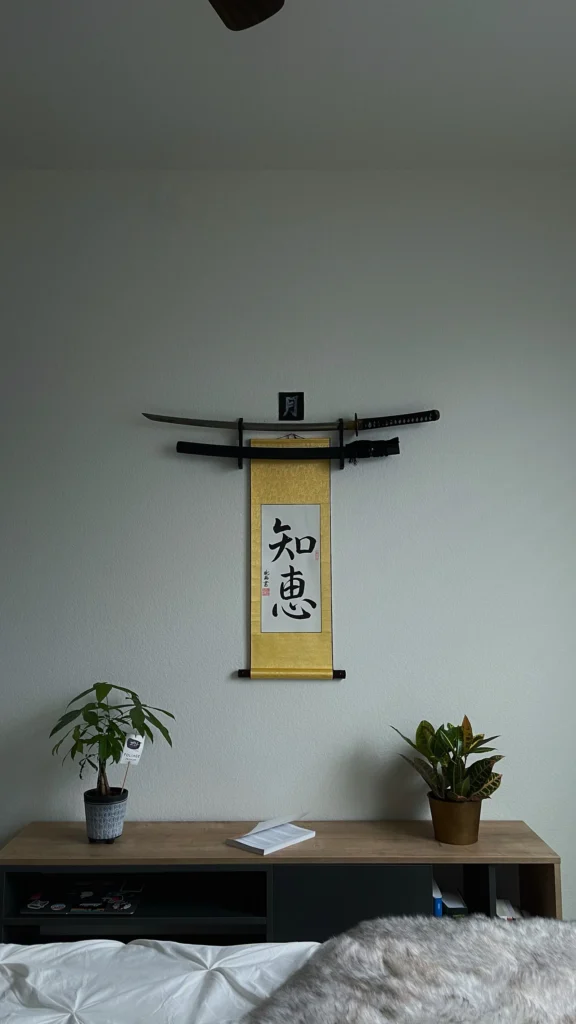
Quick answer: after handling, wipe the blade clean with a soft cloth, moving from the guard towards the tip with the edge facing away from you, then apply a very thin coat of oil such as choji (clove) oil or light mineral oil. Never touch the steel with bare fingers, store the katana horizontally in a dry room, and take it out to check and re-oil it every few weeks, or more often in humid weather.
A well-made katana is a carbon steel blade, and carbon steel reacts to moisture, salt and acids. Sweat from a single fingerprint can leave a rust mark within days in a humid summer in Florida or a damp winter in Britain. The good news: katana care takes only a few minutes, and done regularly, it keeps a blade looking perfect for decades.
Why katanas need regular care
Traditional Japanese swords, and most functional modern katanas, are made from high-carbon steel because it can be hardened to hold a very sharp edge while staying tough. Carbon steel has little chromium, so it has no built-in rust resistance. A thin film of oil keeps oxygen and moisture off the surface; that film slowly evaporates or gets wiped off, so it needs renewing.
What you need
- Soft cloths or rice paper, clean and lint-free. Use separate cloths for cleaning and for oiling.
- Oil: traditional choji oil (mineral oil scented with clove) or plain light mineral oil. Avoid vegetable oils, which turn sticky, and avoid WD-40 as long-term protection.
- Optional uchiko powder: a very fine powder in a cloth ball, tapped on the blade to absorb old oil. Use sparingly, as it is mildly abrasive.
- Cotton gloves or a cloth to hold the blade without touching it.
How to clean and oil a katana
- Prepare a clear space and sit down. Hold the scabbard horizontally with the edge facing up, and draw the blade slowly, letting the spine slide along the scabbard rather than the edge.
- Remove old oil and dust. Fold a clean cloth over the spine and pinch lightly. Wipe from the guard towards the tip, keeping the edge pointing away from your hand. Never wipe from the tip back towards the handle.
- Optional: tap uchiko lightly along both sides and wipe it off in the same way. This lifts old oil and fingerprints.
- Inspect the blade under a good light for fingerprints, spots or dull patches.
- Oil: put a few drops of oil on a second cloth and wipe a thin, even film along both sides and the spine, again from guard to tip. You want a sheen, not drips.
- Return the blade to the scabbard slowly, spine against the scabbard, without forcing it.
How to store a katana
- Horizontally, on a stand or in a case. Traditionally the edge faces up so it does not press into the scabbard.
- In a dry room away from radiators, windows and outside walls. Avoid basements, garages and bathrooms.
- Check it regularly. Every two to four weeks, take the blade out, inspect it and re-oil it. In humid climates, check more often.
- Leather scabbards protect the edge well but can hold moisture. If the scabbard gets damp, let it dry fully, away from direct heat, before storing the sword inside it. For long-term storage, a well-oiled blade on a stand with the scabbard beside it is safest.
Our guide to caring for carbon steel and Damascus blades covers the same principles for knives, and patina vs rust explains how to tell a harmless darkening from rust.
Dealing with rust and stains
Catch rust early and it is easy to remove. For a light orange bloom, put a little oil on a soft cloth and rub gently along the blade, in the direction of the polish lines. Fine (0000) steel wool with oil can be used on modern carbon steel katanas, but go lightly: it changes the finish. Deep pits or rust on a traditionally polished blade should be left to a professional polisher; amateur polishing can ruin the geometry.
Also check the handle. If your katana’s handle is held on by bamboo pegs, make sure they are tight before any swinging, and never use a sword whose handle moves on the blade.
Handling safely
- Always know where the edge is pointing, and never run fingers along the edge to test it.
- Keep children and pets out of the room while a blade is drawn.
- Do not test-cut until you have been shown proper technique; a bad cut can bend a blade or injure you.
- Transport it in its scabbard inside a sword bag or case.
Carbon steel swords we make
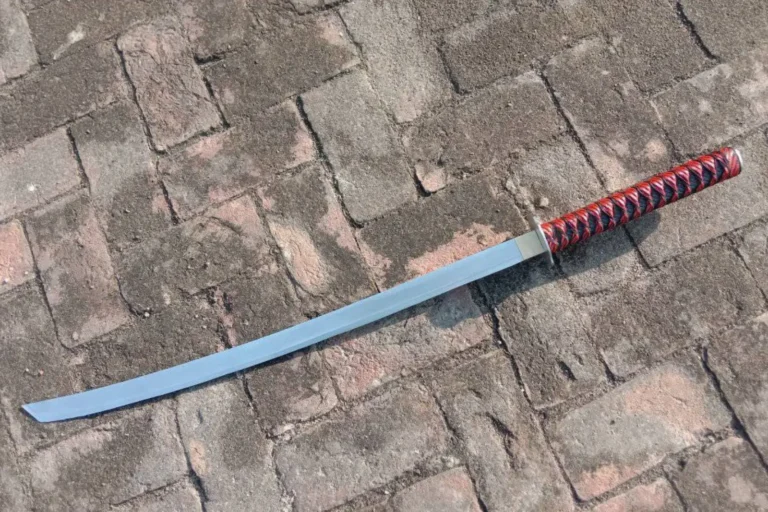
Our Carbon Steel Katana Sword is a sharpened, hand-forged carbon steel katana, 40 inches (102 cm) overall, with a 30 inch (76 cm) curved blade, a red-wrapped handle and a leather scabbard. The same care routine applies to every carbon steel sword, including the curved Shamshir Sword, with its 28 inch (71 cm) carbon steel blade. Browse all katanas.
Laws on curved swords vary. In the UK, for example, the sale and import of curved swords with blades of 50 cm (about 20 in) or more are restricted, with limited exemptions. Please check your local laws before ordering.
Frequently asked questions
How often should I oil my katana?
Every two to four weeks for a sword on display, and every time it has been handled or used. Oil more often in humid weather.
What is the best oil for a katana?
Choji oil, which is a light mineral oil with a little clove oil, is traditional. Plain light mineral oil works just as well. Avoid cooking oils, which go sticky.
Can I store my katana in its scabbard?
Yes, for everyday storage, as long as the blade is oiled and the scabbard is dry. For long-term storage, check it regularly, because any trapped moisture can cause rust.
Why should I not touch a katana blade?
Fingerprints contain salts and acids from your skin that can etch carbon steel and leave rust marks, sometimes within a few days.
Should a katana be stored edge up or edge down?
Traditionally, edge up when displayed horizontally in the scabbard, so the edge does not rest against the inside of the scabbard.