Handmade in Pakistan · Shipped worldwide

Forged by hand · Built to last

Customized HandmadeKnives & Swords

Designed by You. Handcrafted by Us.

Worldwide ShippingDelivered to your door
Secure PaymentsSafe & trusted ordering
Dedicated SupportHere to help you
Premium QualityHandmade Excellence

Bring your vision to life

Custom Knives & Swords

Unique designs. Premium materials. Expert craftsmanship.
Create a one-of-a-kind blade, made just for you.

Start a Custom Order
  • Custom DesignsYour ideas, our expertise
  • Premium MaterialsDamascus, steel & more
  • Expert CraftsmanshipBuilt to perfection

About Us

Handcrafted in Wazirabad since 2003. Heritage, precision and artistry in every blade.

A Legacy of Craftsmanship

Since 2003, we have been manufacturing handcrafted blades in Wazirabad, Pakistan. Combining generations of metalworking expertise with your unique specifications. From dimensions and designs to premium steels including Damascus, stainless, D2, J2, spring, and carbon steel. Every piece is crafted with precision, quality, and attention to detail.

01

Art of Handcrafting

A refined expression of heritage, precision, and artistry.

02

Custom builds

Share a design, measurements and material preferences with the Manufacturer.

03

Worldwide Delivery

From our hands to your doorstep, worldwide.

Custom Order

Designed by You. Handcrafted by Us.

Made to your design

Commission a Custom Blade

Design a custom handmade knife that reflects your style and meets your needs. Choose your preferred blade steel, handle material and add a personal touch with custom engraving. Our skilled craftsmen bring your vision to life.

Choose measurements and materials Discuss your design directly on WhatsApp Worldwide Delivery

Contact Us

Custom order, price enquiry or a question about a blade? Get in touch and the Manufacturer will reply shortly.

Call Us

Call or message us to discuss prices, custom designs and delivery.

+92 342 1681464

How to Care for a Damascus or Carbon Steel Knife

By Pakistan Knives & Swords, Wazirabad · · 6 min read

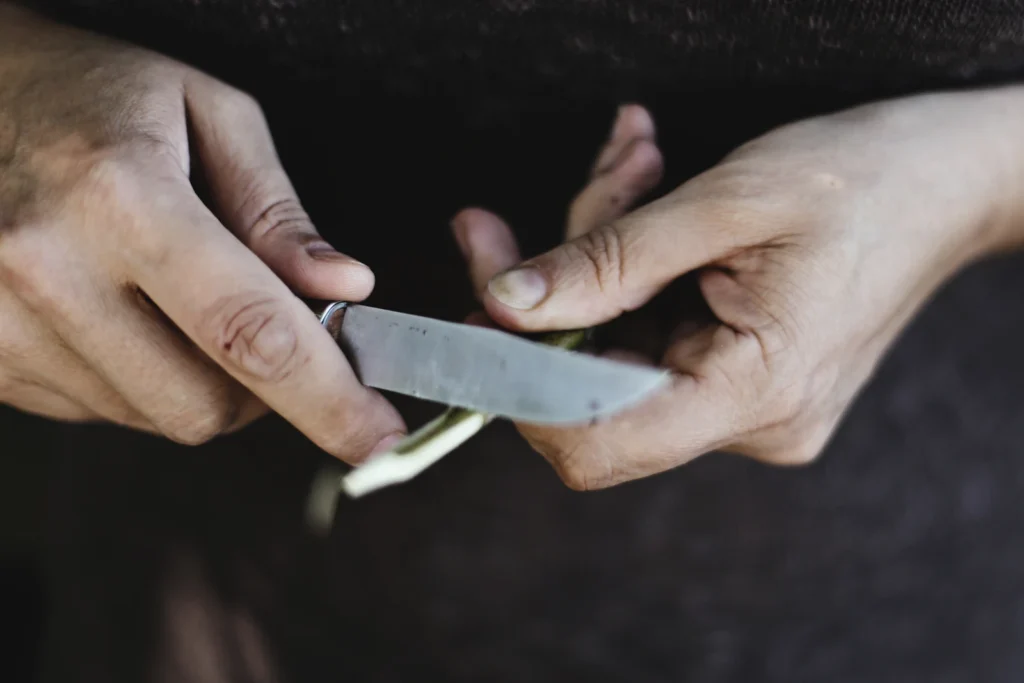
Hands sharpening a knife blade on a sharpening stone
Photo by Ksenia Makagonova on Unsplash

The short version: wash your knife by hand, dry it straight away, and wipe on a thin coat of oil before storing it somewhere dry. Never put it in the dishwasher or leave it wet. Keep the edge sharp with a whetstone and strop, and treat wood, bone and horn handles to a little oil or wax now and then. Do that and a Damascus or carbon steel knife will last a lifetime.

Why Damascus and carbon steel knives need care

High-carbon steel is loved by knife makers because it takes a very fine edge and is easy to resharpen. The trade-off is that it has little or no chromium, so it reacts with water, salt and acids. Damascus steel is usually made with at least one high-carbon steel, so it needs the same care. None of this is difficult: it takes about a minute after each use.

Over time, carbon steel also develops a patina, a grey-blue or brownish darkening of the surface. A patina is normal and actually helps protect the steel. Orange or red spots, on the other hand, are rust and should be removed early.

Everyday care after each use

  1. Clean it soon: rinse the blade in warm water with a drop of mild dish soap, especially after cutting fruit, onions, salty or acidic food, or after dressing game.
  2. Never use the dishwasher: the heat, long wet cycle and harsh detergent cause rust and can crack wood, bone and horn handles.
  3. Dry it completely: wipe the blade, the guard and the joint where blade meets handle with a soft, dry cloth.
  4. Do not soak it: never leave a knife in the sink or in water.
  5. Oil it before storage: a few drops wiped thinly over the blade is enough (see below).

Oiling: which oil and how often

  • Kitchen knives: use a food-safe oil such as food-grade mineral oil or camellia oil, because the blade will touch food.
  • Hunting knives and swords: food-safe oils work well; for display pieces and swords, a light gun or blade oil or a microcrystalline wax gives longer protection.
  • How much: put a few drops on a cloth and wipe a thin film over both sides. The blade should look barely damp, not greasy.
  • How often: after cleaning if the knife will be stored, before long-term storage, and every few weeks for knives that hang on the wall or sit in a display case. In humid climates, oil more often.

How to remove rust spots

Catch rust early and it comes off easily:

  1. Wipe a little oil onto the spot.
  2. Rub gently with a soft cloth or the finest grade of steel wool, following the direction of the blade, not across it.
  3. Wipe clean, dry and re-oil.

On Damascus, avoid harsh abrasives and heavy polishing: they can lighten the etched pattern. If the pattern fades after rust removal or years of use, it can be re-etched to bring the contrast back. This is a delicate job, so ask the maker (we are happy to advise) rather than experimenting with strong acids at home.

How to sharpen your knife

A sharp knife is a safer knife: it needs less force and is less likely to slip. You need a whetstone (a combination stone of around 1000 grit for sharpening and 3000–6000 grit for polishing is a good start) and, ideally, a leather strop.

  1. Prepare the stone: soak water stones until they stop bubbling, or follow the instructions for your stone (some only need a splash of water or oil).
  2. Find the angle: as a guide, hold kitchen knives at roughly 15–20° per side and hunting, outdoor and chopping knives at roughly 20–25° per side. A steeper angle gives a stronger edge; a lower angle gives a finer one.
  3. Sharpen the first side: push the edge across the coarse side of the stone, from heel to tip, keeping the angle steady, until you can feel a slight burr along the opposite edge.
  4. Repeat on the other side with the same number of strokes.
  5. Refine: repeat with lighter pressure on the fine side of the stone.
  6. Strop: draw the blade spine-first along a leather strop a few times per side to remove the burr and polish the edge.
  7. Clean, dry and oil the blade.

Curved blades such as a kukri or karambit are easier to sharpen in sections, lifting the handle as you follow the curve. Between sharpenings, a few passes on a honing rod or strop will keep the edge keen.
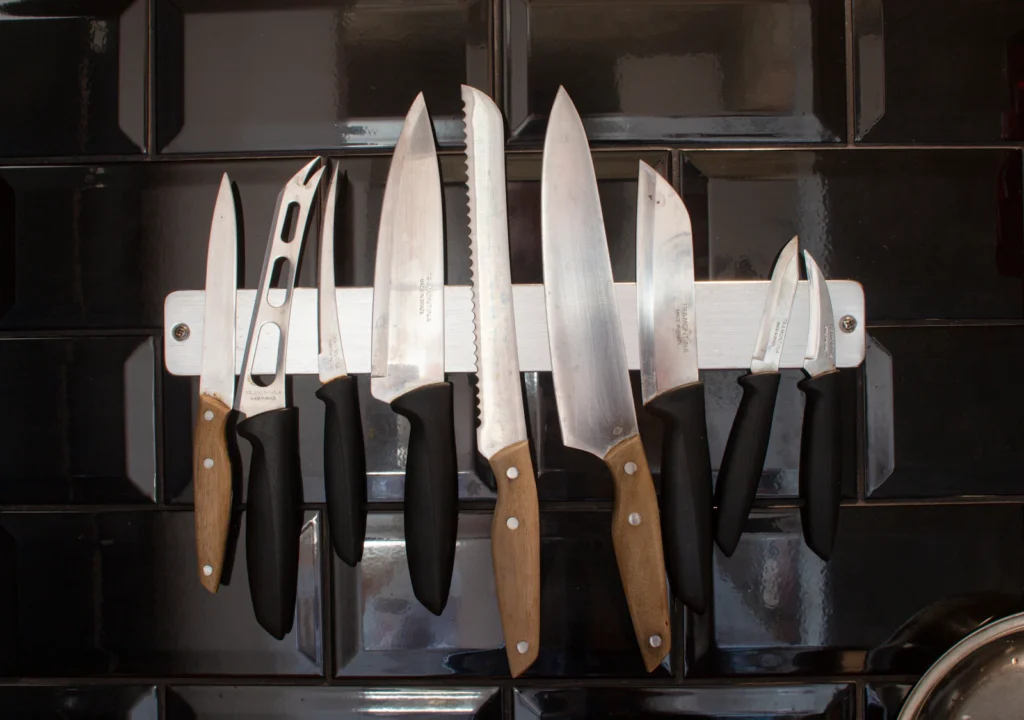
How to store knives and swords

Kitchen knives stored on a magnetic knife strip
Photo by Danilo Rios on Unsplash
  • Keep edges apart: use a knife block, a magnetic strip, blade guards or a knife roll, never loose in a drawer where edges knock together.
  • Do not leave knives in leather sheaths long-term: leather can hold moisture and the chemicals used in tanning can mark steel. Use the sheath for carrying, and store the knife out of it in a dry place.
  • Swords: wipe off fingerprints after handling (skin oils and salt cause rust spots), keep a thin coat of oil or wax on the blade, and store in a dry room away from heaters and damp walls.
  • Humid climates: check stored blades every few weeks and re-oil as needed.

Handle care: wood, bone, horn, antler and micarta

  • Wood (walnut, rosewood and others): keep dry; every few months rub in a little food-safe oil or beeswax to stop it drying out or cracking.
  • Bone, horn and antler: natural materials that dislike soaking and sudden heat. Wipe clean, dry promptly, and apply a light coat of oil or wax occasionally.
  • Micarta and G10: tough synthetic materials that are practically waterproof. Simply wash and dry.

Examples from our collection: the Shadow Ridge Tracker Knife pairs carbon steel with a riveted wood handle, the Shark Kukri Knife is carbon steel with rosewood, the Viking Dagger Knife uses antler, bone and micarta, and the Phantom Trail Tracker Knife has a low-maintenance G10 handle. In the kitchen, the Carbon steel Meat Cleaver Knife is carbon steel and benefits from the same drying and oiling routine.
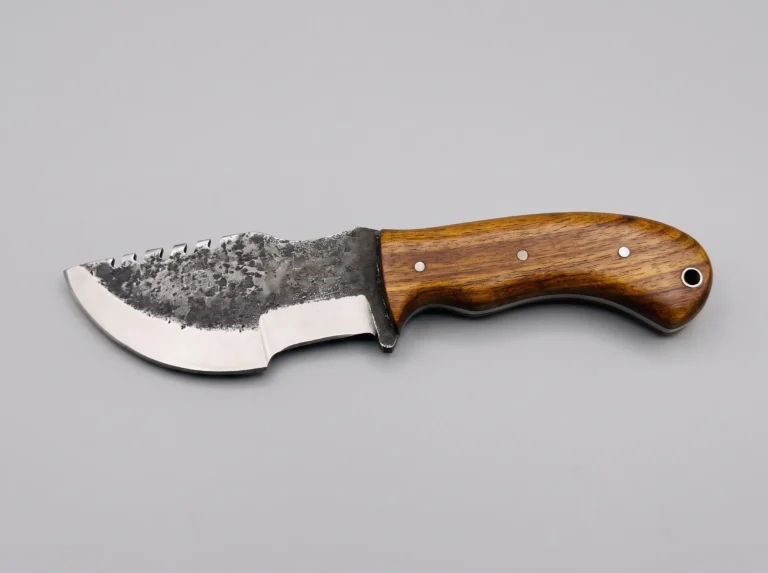
Shadow Ridge Tracker Knife, handmade by Pakistan Knives & Swords
Shadow Ridge Tracker Knife (Product Code TRC-03), handmade in our Wazirabad workshop

New to Damascus? Read our Damascus steel buyer’s guide. Choosing a set for the kitchen? See how to choose a chef knife set.

Frequently asked questions

How do you stop a Damascus knife from rusting?

Wash it by hand, dry it immediately and completely, and wipe on a thin coat of food-safe oil before storing it in a dry place. Never put it in the dishwasher or leave it wet.

Can you put a Damascus or carbon steel knife in the dishwasher?

No. The long hot, wet cycle and strong detergents cause rust on the blade and can damage wood, bone and horn handles. Always wash by hand.

What oil should I use on my knife?

For kitchen knives, use a food-safe oil such as food-grade mineral oil or camellia oil. For hunting knives, swords and display pieces, a light blade oil or microcrystalline wax also works well.

What angle should I sharpen my knife at?

As a general guide, about 15–20 degrees per side for kitchen knives and about 20–25 degrees per side for hunting, outdoor and chopping knives.

Is the dark colour on my carbon steel knife rust?

Usually not. A grey, blue or brown even darkening is a patina, which is normal and helps protect the steel. Orange or red spots are rust and should be removed with a little oil and a soft cloth.

← All guides

  • Hand Crafted in Pakistan
  • Premium Steel
  • Custom Options
  • Worldwide Delivery

Product Description

Product details

Custom MadeHandcrafted to your specifications
Price on RequestContact us for a quote

Product Code:

Quantity
1
Request Quote
Want a different steel, handle, size or engraving?We customize every piece — chat on WhatsApp. ← Back to category
Chat on WhatsApp