Art of Handcrafting
A refined expression of heritage, precision, and artistry.
Forged by hand · Built to last
Designed by You. Handcrafted by Us.
Handcrafted in Wazirabad since 2003. Heritage, precision and artistry in every blade.
Since 2003, we have been manufacturing handcrafted blades in Wazirabad, Pakistan. Combining generations of metalworking expertise with your unique specifications. From dimensions and designs to premium steels including Damascus, stainless, D2, J2, spring, and carbon steel. Every piece is crafted with precision, quality, and attention to detail.
A refined expression of heritage, precision, and artistry.
Share a design, measurements and material preferences with the Manufacturer.
From our hands to your doorstep, worldwide.
Designed by You. Handcrafted by Us.
Made to your design
Design a custom handmade knife that reflects your style and meets your needs. Choose your preferred blade steel, handle material and add a personal touch with custom engraving. Our skilled craftsmen bring your vision to life.
Custom order, price enquiry or a question about a blade? Get in touch and the Manufacturer will reply shortly.
Our workshop is in the City of Cutlery. Visiting hours are Monday to Thursday.
Pakistan Tanneries Street, Nizamabad, Wazirabad 52000, Punjab, PakistanCall or message us to discuss prices, custom designs and delivery.
+92 342 1681464Chat on WhatsApp or follow our work on social media.
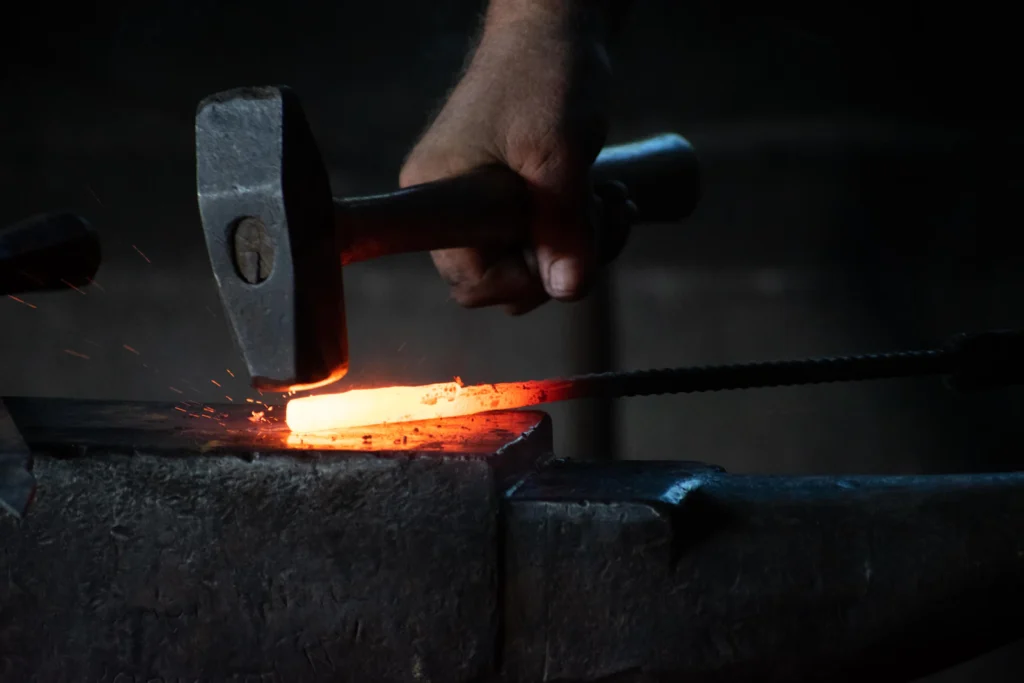
In short: a modern Damascus knife is made by forge-welding layers of two different steels together, folding and hammering them, and then etching the finished blade so the layers show as a flowing pattern. Real Damascus has the pattern through the steel, so it shows on the spine and edge too. A fake has a pattern printed or laser-etched only on the surface. Buy from the maker, ask what steels are used, and look for the pattern running around the whole blade.
The name “Damascus steel” is used for two different things, and knowing the difference helps you buy with confidence.
So when a maker says “Damascus knife”, they almost always mean a pattern-welded blade. That is not a lesser product: it is real, hand-forged layered steel, and it is the craft our workshop in Wazirabad, Pakistan has practised since 2003.
Every maker has their own recipe, but a pattern-welded blade goes through the same basic steps:
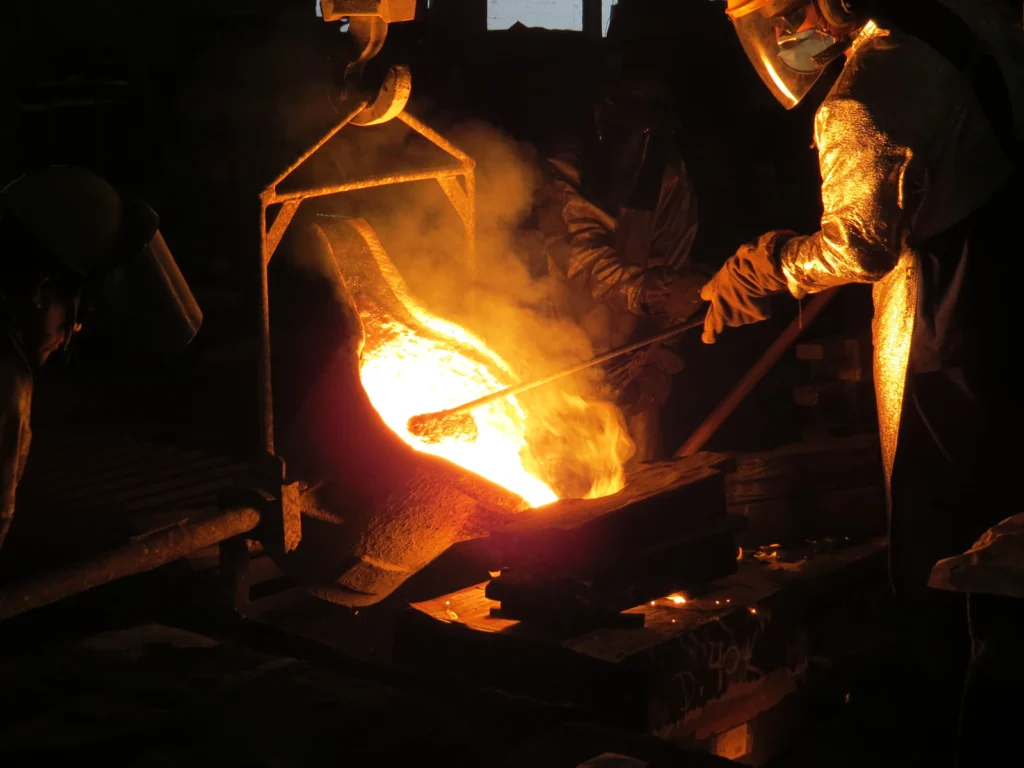
Because so much of this is done by hand, no two Damascus blades are exactly alike. Small variations in the pattern are a sign of real forging, not a defect.
“Fake Damascus” usually means a plain, single-steel blade with a Damascus-style pattern printed, laser-etched or acid-stamped on its surface. It may look similar in photos, but the pattern wears off and the blade has none of the character of forged steel. Here is how to tell them apart:
| Check | Real (pattern-welded) Damascus | Fake / surface-printed |
|---|---|---|
| Spine and edge | Layers are visible on the spine, the tip and along the cutting edge | Spine and edge are plain, one colour |
| Both sides | The pattern flows naturally and differs slightly from side to side | Both sides look identical, like a stamp |
| Pattern edges | Lines fade and flow into each other | Lines are very sharp-edged or look “drawn on” |
| After sharpening or polishing | Pattern stays, and returns after a light re-etch | Pattern rubs off and does not come back |
| Seller information | Maker can name the steels used and show the forging | No details beyond “Damascus look” |
The simplest test you can do at home is to look closely at the spine and the very edge. If the layers carry on around the blade, the steel is layered all the way through.
The pattern does not change how well the knife cuts. Choose the one you like looking at: you will see it every time you use the knife.
Yes, when it is made from the right steels and heat-treated properly. A good Damascus blade combines a hard high-carbon steel, which takes a fine edge, with a tougher contrasting steel, and it can hold an edge as well as many quality single steels. What really decides performance is the steel recipe and heat treatment, not the pattern alone.
The main thing to know is care: most Damascus contains high-carbon steel, which can rust if left wet. Wipe it dry after use and add a thin coat of oil now and then. Our Damascus and carbon steel knife care guide covers cleaning, oiling, sharpening and storage step by step.
Every Damascus blade we sell is hand-forged in our workshop in Nizamabad, Wazirabad, often called the City of Cutlery. Here are some of the Damascus pieces in our collection:
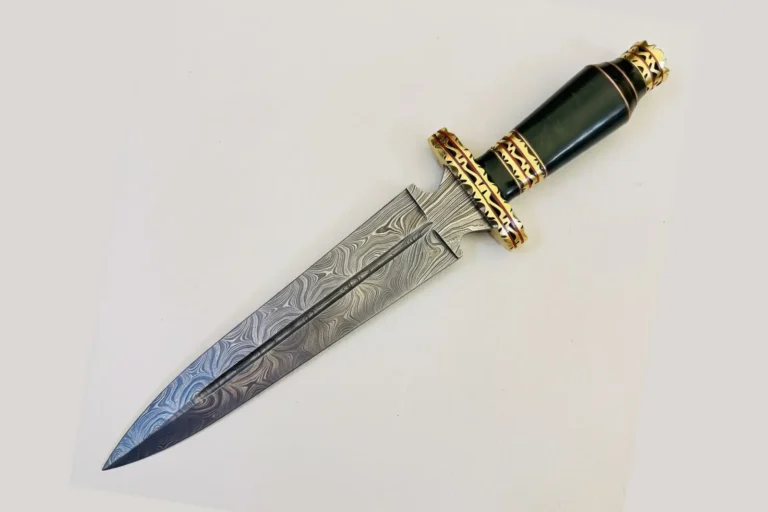
You can browse all hunting knives, swords and kitchen knives, or order a custom Damascus blade made to your own design, size and handle.
Real Damascus is layered steel: the pattern comes from different steels forge-welded together and revealed by etching. Fake Damascus has the pattern printed or laser-etched only on the surface, so the spine and edge look plain.
It can, because most Damascus contains high-carbon steel. Wipe the blade dry after use, keep it out of the dishwasher, and apply a thin coat of oil from time to time to prevent rust.
It depends on the maker and the pattern. Many hand-forged blades have from about a hundred to several hundred layers. More layers give a finer pattern, but do not by themselves make the knife cut better.
On a genuine blade the pattern is in the steel, so it cannot wear off. It may fade slightly with heavy polishing or sharpening, and a light re-etch brings it back.
Yes. Pakistan Knives & Swords makes custom Damascus knives and swords in Wazirabad to your measurements, handle material and engraving, and ships worldwide. Send your design on WhatsApp or use the Custom Order page.
Product Code: