Art of Handcrafting
A refined expression of heritage, precision, and artistry.
Forged by hand · Built to last
Designed by You. Handcrafted by Us.
Handcrafted in Wazirabad since 2003. Heritage, precision and artistry in every blade.
Since 2003, we have been manufacturing handcrafted blades in Wazirabad, Pakistan. Combining generations of metalworking expertise with your unique specifications. From dimensions and designs to premium steels including Damascus, stainless, D2, J2, spring, and carbon steel. Every piece is crafted with precision, quality, and attention to detail.
A refined expression of heritage, precision, and artistry.
Share a design, measurements and material preferences with the Manufacturer.
From our hands to your doorstep, worldwide.
Designed by You. Handcrafted by Us.
Made to your design
Design a custom handmade knife that reflects your style and meets your needs. Choose your preferred blade steel, handle material and add a personal touch with custom engraving. Our skilled craftsmen bring your vision to life.
Custom order, price enquiry or a question about a blade? Get in touch and the Manufacturer will reply shortly.
Our workshop is in the City of Cutlery. Visiting hours are Monday to Thursday.
Pakistan Tanneries Street, Nizamabad, Wazirabad 52000, Punjab, PakistanCall or message us to discuss prices, custom designs and delivery.
+92 342 1681464Chat on WhatsApp or follow our work on social media.
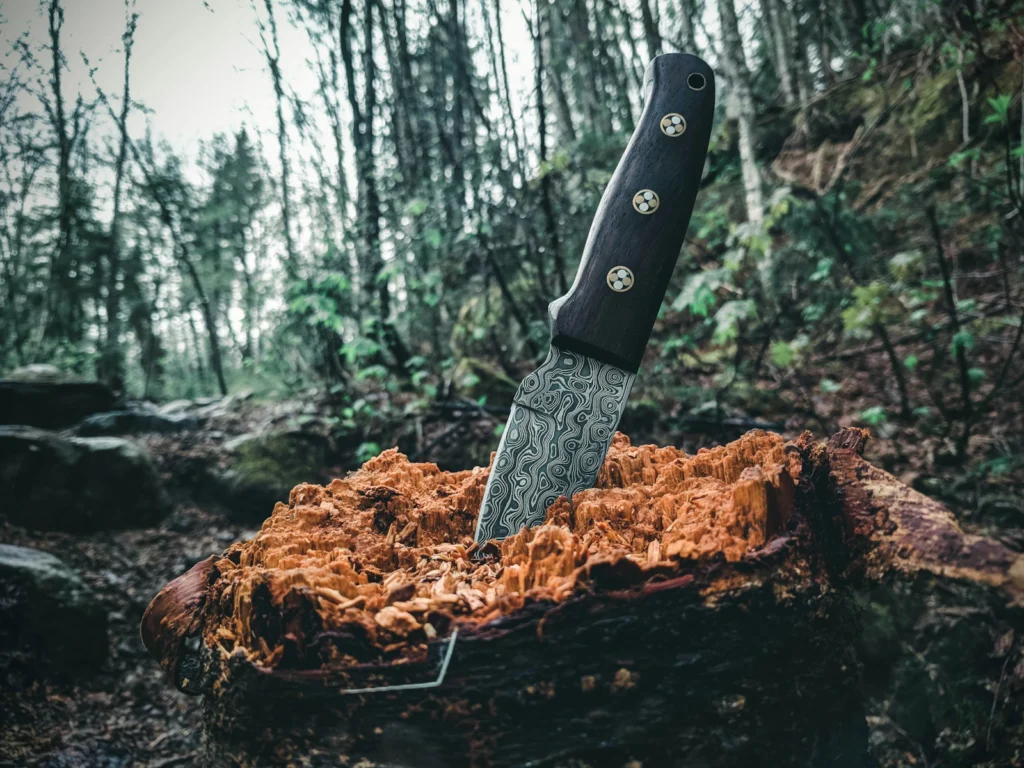
Quick answer: for skinning and field dressing game, choose a skinner. For one knife that does a bit of everything outdoors, choose a tracker or a mid-size bowie. For chopping wood and clearing brush, a kukri is hard to beat. Daggers and karambits are mostly collector, display and specialist knives rather than everyday hunting tools.
| Type | Blade shape | Best for | Typical size |
|---|---|---|---|
| Bowie | Large, clip point, single edge | All-round camp work, cutting, light chopping | Large |
| Kukri | Forward-curved, weight towards the tip | Chopping wood, clearing brush | Large and heavy |
| Dagger | Symmetrical, usually double-edged, sharp point | Collecting, display, piercing | Medium to large |
| Skinner | Short, wide belly that sweeps up to the tip | Skinning and field dressing game | Small |
| Tracker | Multi-section blade with a serrated or notched spine | Bushcraft and camp tasks, an all-in-one tool | Medium |
| Karambit | Claw-shaped, curved, with a finger ring | Specialist cutting, collecting | Small |
The bowie is the knife most people picture when they hear “hunting knife”: a large fixed blade with a clip point (a curved cut-out towards the tip) and a solid guard. Its size and weight let it slice, carve and do light chopping, which is why it has been a favourite camp knife for generations. Most modern hunting knife designs are smaller versions of the bowie shape.
Choose a bowie if you want one big, dependable fixed blade for camping and outdoor work. It is less handy for fine skinning than a dedicated skinner.
From our workshop: Pathfinder Bowie Knife and Woodsman Bowie Knife in Damascus steel, Karakoram Bowie Knife in D2 steel, and Iron Reign Bowie Knife with a deer antler handle.
The kukri comes from Nepal and the Himalayan region. Its blade bends forward, so the weight sits towards the front of the knife. That makes each swing hit harder, a bit like a small axe, which is why the kukri is a favourite for chopping branches, splitting kindling and clearing brush.
Choose a kukri if chopping matters more than fine cutting. It is heavier than other knives here, so it is usually carried in a sheath on a belt or pack.
From our workshop: Wolf-Crescent Kukri Knife and Crown Kukri knife in Damascus steel, Medieval Kukri knife at 16 inches, Shark Kukri Knife in carbon steel, and Crimson-Peak Kukri Knife in stainless steel.
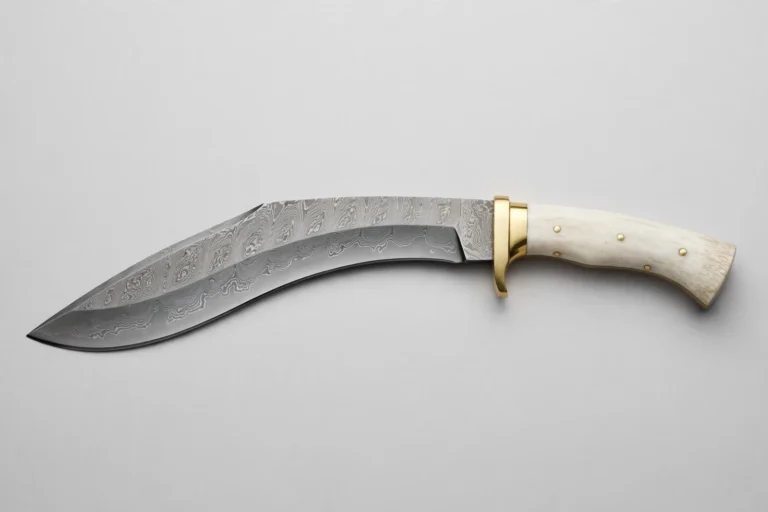
A dagger has a symmetrical blade that tapers to a sharp point, usually with two edges. It is designed for piercing rather than slicing or chopping, so it is not the most practical hunting tool. Hand-forged daggers are, however, some of the most beautiful blades a maker can produce, and they are popular as collector’s pieces, display knives and gifts.
Choose a dagger if you are buying for a collection, a display or a special gift.
From our workshop: SherDil Dagger Knife, Viking Dagger Knife and IVORY Crown Dagger Knife in Damascus steel, Sherpa Dagger Knife in D2 steel, and Stag-Royale Dagger Knife with a deer antler handle.
A skinner has a short blade with a wide, curved “belly” that sweeps up to the point. The rounded profile lets you separate hide from meat in long, smooth strokes without puncturing the hide. Some skinners add a gut hook on the spine for opening game cleanly. A small, sharp skinner is often the knife hunters actually use most in the field.
Choose a skinner if you hunt and process your own game.
From our workshop: Himalayan Skinner knife in Damascus steel, Harrier skinner Knife in D2 tool steel, Falcon skinner Knife with a white bone handle, and the GutHuk Knife.
The tracker knife has a distinctive blade with several sections: a straight edge for cutting, a curved section near the tip, and a notched or serrated spine. The idea is to combine the jobs of a knife, a small hatchet and a saw in one fixed blade, which makes it popular for bushcraft and camping.
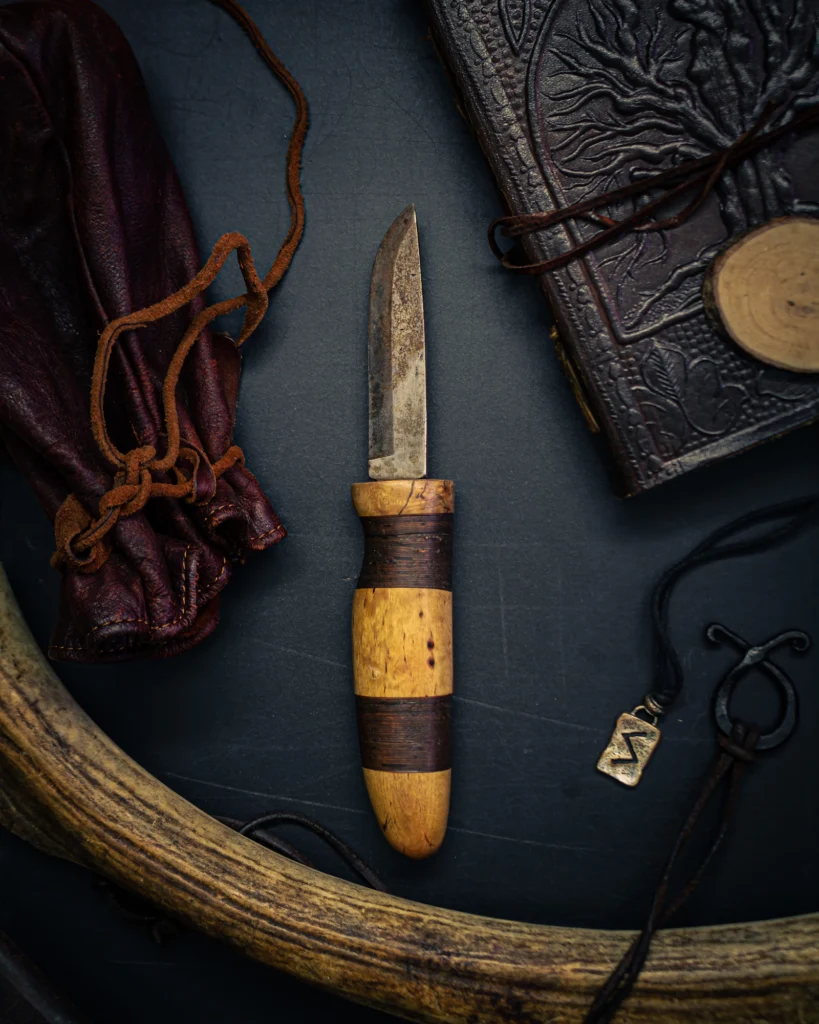
Choose a tracker if you want one versatile outdoor knife for camp tasks, shelter building and food preparation.
From our workshop: Eldervane Tracker Knife and Sovereign Tracker Knife in Damascus steel, Shadow Ridge Tracker Knife and Obsidian Trail Tracker Knife in carbon steel, and Phantom Trail Tracker Knife in stainless steel with a G10 handle.
The karambit comes from Southeast Asia, where it began as a farming tool. Its blade curves like a claw and the handle usually ends in a finger ring for a secure grip. Today it is mainly a specialist and collector’s knife, prized for its unusual shape.
Choose a karambit if you collect distinctive blades or want a compact, very secure-gripping cutting tool.
From our workshop: AUREN Karambit Knife, Indus Karambit Knife and Everest Karambit Knife in Damascus steel, and the Double-Edged Karambit Knife in D2 steel.
Bigger is not always better. A skinner of around 8 inches overall is easier to control when dressing game than a 14-inch bowie or kukri. Check the overall, blade and handle lengths on each product page, and remember that we can make most designs to your own measurements.
Antler, bone, horn and wood handles look traditional and feel warm in the hand. Micarta and G10 are synthetic materials that stay grippy when wet and need almost no care. Whatever you choose, our knife care guide explains how to keep it in good condition.
A note on the law: rules on owning, carrying and importing knives differ from country to country, and daggers and karambits are restricted in some places. Please check your local laws before ordering.
For most hunters, a skinner or a medium-size fixed blade such as a tracker or small bowie is the most useful. A skinner handles field dressing and skinning; a tracker or bowie covers general camp tasks.
For chopping, yes: the kukri’s forward-weighted curved blade chops more like a hatchet. For general cutting, carving and food preparation, a bowie is more versatile.
A tracker knife is an all-in-one outdoor tool: its straight edge cuts, its curved front section chops and skins, and its notched spine can be used for scraping and light sawing.
Fixed blades are stronger and easier to clean, which makes them the usual choice for hunting and heavy outdoor use. Folding knives are easier to carry in a pocket.
Yes. Pakistan Knives & Swords makes custom hunting knives in Wazirabad, Pakistan, to your blade length, steel, handle material and engraving, and ships worldwide. Send your idea on WhatsApp or use the Custom Order page.
Product Code: