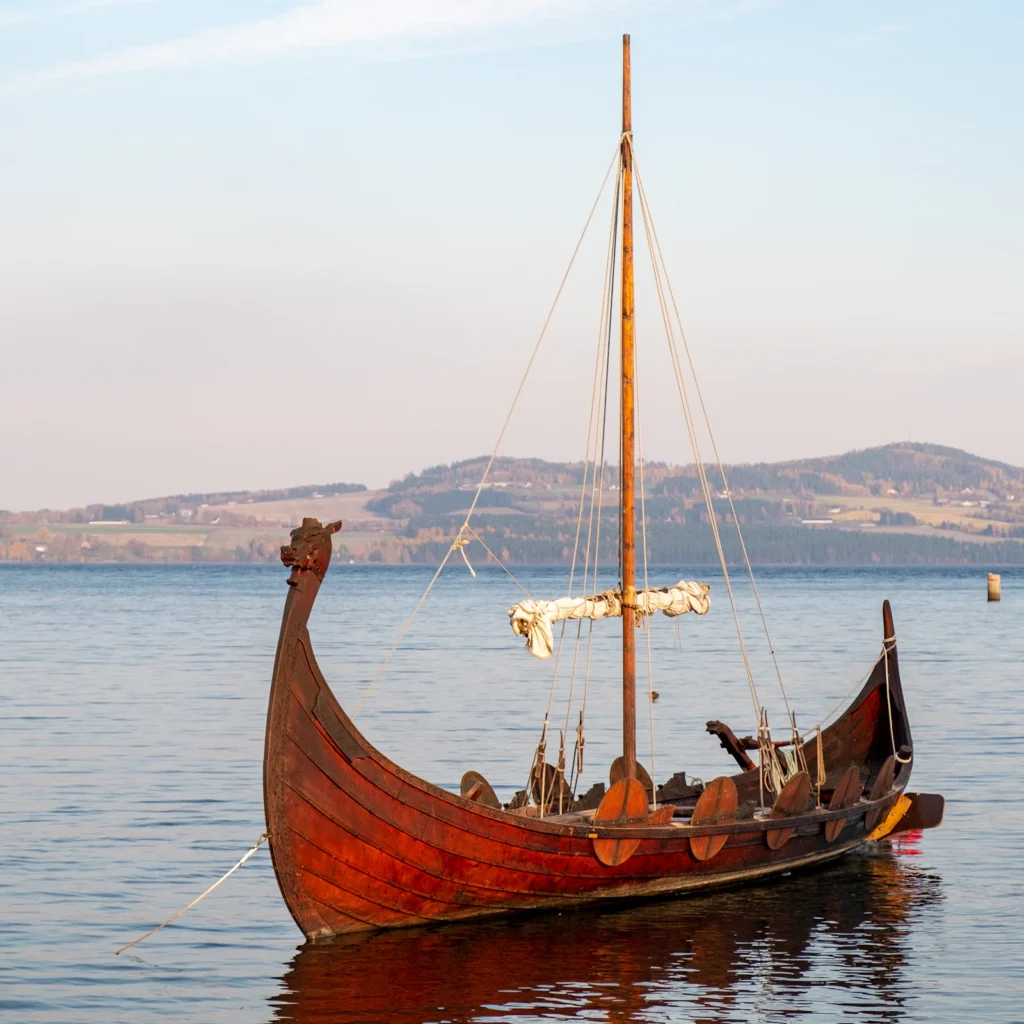
Quick answer: almost every Viking, man or woman, carried a knife for daily tasks, and many carried a larger single-edged blade called a seax, used across Scandinavia, Anglo-Saxon England and the wider Germanic world. Viking-age blades were often made from pattern-welded steel, the ancestor of modern Damascus, and handles were typically wood, bone or antler. Modern “Viking daggers” are inspired by these designs rather than exact copies.
Interest in the Norse world has never been higher, thanks to television, games and a wave of new archaeology across Scandinavia and Britain. Reenactors, history lovers and knife collectors all ask the same question: what blades did the Vikings actually carry, roughly from the late 8th to the 11th century?
The everyday Viking knife
The most common Viking blade was not a sword or an axe but a simple knife. Archaeologists find them in graves, homes and towns from York to Birka, carried by men and women alike. They were working tools for eating, cutting rope, woodwork, leatherwork and preparing food. Most had a single-edged blade of a few inches, a tang pushed into a handle of wood, bone or antler, and were carried in a leather sheath hanging from the belt.
The seax
The seax (also spelled sax) was a larger single-edged knife used across the Germanic world, including Anglo-Saxon England and Viking-age Scandinavia. Sizes ranged from small utility knives to long blades approaching short swords. Many had a distinctive “broken-back” profile, where the spine angles sharply down towards the point.
One famous example, the Seax of Beagnoth, was found in the River Thames in London and is now in the British Museum. Its blade is inlaid with a runic alphabet and a name. The seax shows how the line between tool and weapon was blurred: the same blade that cut food and wood could defend its owner.
Pattern welding: Viking “Damascus”
Early medieval smiths in Europe often made blades by pattern welding: twisting and forge-welding rods of iron and steel with different compositions. The result was stronger and more consistent than the iron of the time, and when polished or etched it showed swirling, snake-like patterns. Many Migration-era and Viking-age swords and some seaxes were made this way.
Modern Damascus is made using the same basic principle, although with better, more uniform steels. Read our Damascus steel buyer’s guide to learn how it is forged today and how to tell real pattern-welded steel from a printed imitation.
Antler, bone and wood handles
Norse craftsmen used what the land provided. Red deer and reindeer antler, cattle bone and local hardwoods were common handle materials, sometimes carved with interlace patterns. Antler is tough, grippy and naturally textured; bone is smooth and easy to carve. These materials are still popular on Viking-style knives because they look and feel authentic. Modern makers often add a micarta spacer or section for extra strength and water resistance.
Where to see real Viking blades
- British Museum, London: Anglo-Saxon and Viking-age finds, including the Seax of Beagnoth.
- Jorvik Viking Centre, York: life in Viking-age York (Jorvik), with everyday tools and knives.
- National Museum of Denmark, Copenhagen: one of the richest Viking collections in the world.
- Historiska museet, Stockholm, and finds from the Viking town of Birka.
- Museum of the Viking Age, Oslo, home of the famous Viking ships.
Modern Viking-style daggers
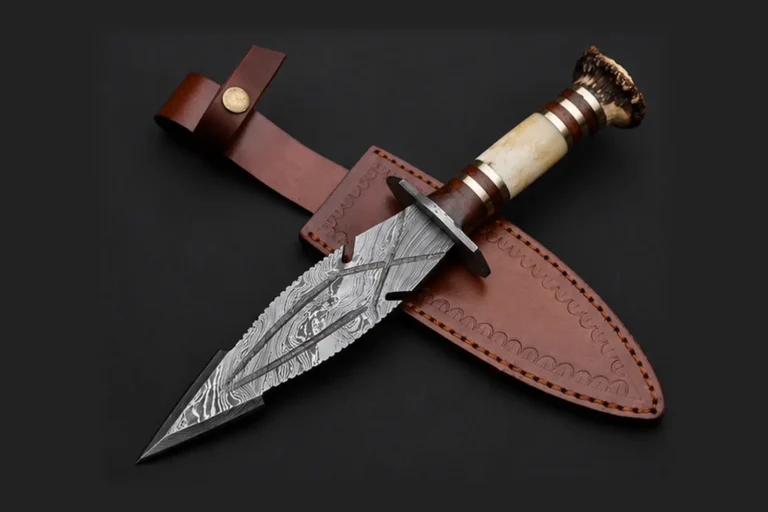
Today’s Viking-style daggers combine historical inspiration with modern steel. Most are double-edged daggers rather than single-edged seaxes, so think of them as Norse-inspired rather than replicas. When choosing one, look for real pattern-welded Damascus, traditional handle materials, and a leather sheath.
- Viking Dagger Knife: a Viking-style Damascus steel dagger with a 6 in (15 cm) blade and a handle of antler, bone and micarta, about 10.5 in (27 cm) overall.
- IVORY Crown Dagger Knife: a hand-forged Damascus dagger with a 7 in (18 cm) blade and a natural antler handle, 12 in (30 cm) overall.
The Viking Dagger has the Norse look with its layered antler and bone handle, while the IVORY Crown Dagger is slightly larger, with a full antler handle. Both come with a leather sheath. Browse all daggers, and keep the Damascus looking its best with our Damascus care guide.
If you take part in reenactment or Viking festivals, check the event rules, and please check your local laws on carrying daggers in public.
Frequently asked questions
What knife did the Vikings use?
Most Vikings carried a small single-edged everyday knife, and many also carried a larger seax. Swords were expensive and less common; knives and axes were everywhere.
What is a seax?
A seax is a single-edged knife or short sword used by Germanic peoples, including the Anglo-Saxons and Vikings, from the 5th to the 11th century, often with a broken-back blade profile.
Did Vikings use Damascus steel?
They used pattern-welded steel, which is the same basic technique behind modern Damascus: different steels and irons twisted and forge-welded together, producing a visible pattern.
What were Viking knife handles made of?
Mostly wood, bone and antler, sometimes decorated with carving. Antler from red deer and reindeer was a common choice.
Is a Viking dagger historically accurate?
Most modern Viking daggers are inspired by Norse design and materials rather than being exact replicas, since everyday Viking blades were usually single-edged knives and seaxes.