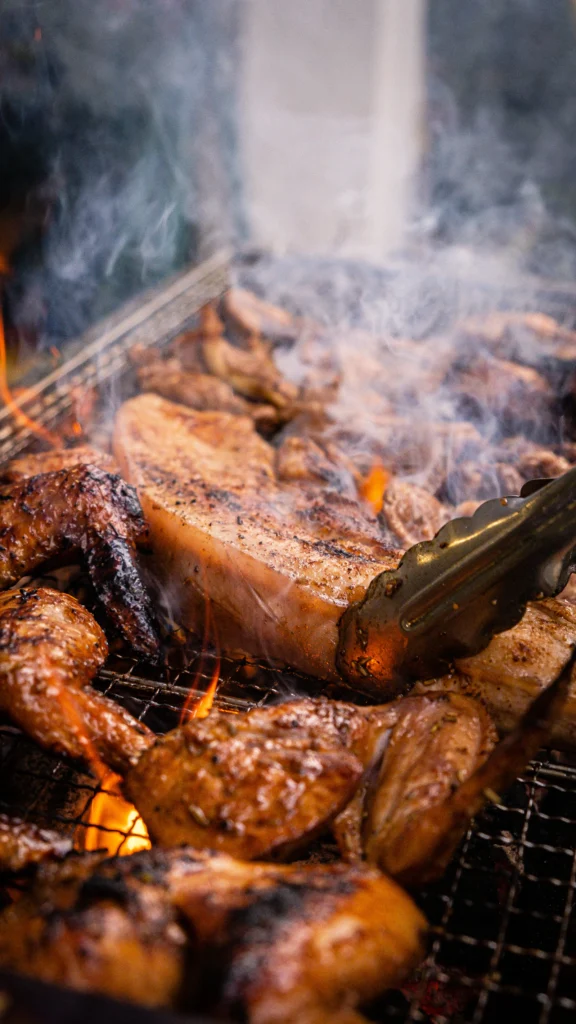
Quick answer: a meat cleaver is a heavy, wide, rectangular knife that uses its weight to chop through joints, cartilage and small bones that would chip a chef’s knife. At the BBQ it is ideal for spatchcocking chicken, separating rib tips, jointing poultry, and chopping pulled pork or burnt ends. Chop with a controlled swing from the elbow onto a thick wooden board, never twist the blade in bone, and avoid large, dense bones and frozen meat.
From Texas brisket and Carolina pulled pork to a British Sunday roast or a Spanish lamb asado, meat cooking has a lot of jobs that are too rough for a fine chef’s knife. That is where a cleaver comes in. It is one of the oldest and simplest kitchen tools, and one of the most satisfying to use.
What a meat cleaver is
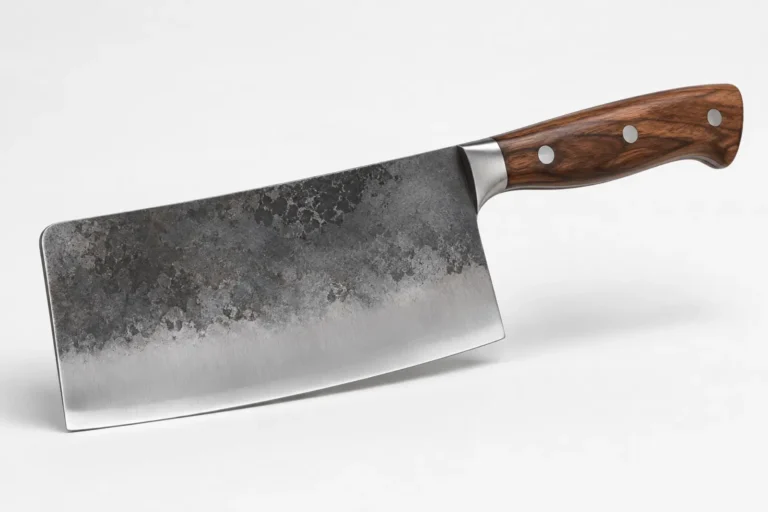
A Western meat cleaver, sometimes called a butcher’s cleaver, has a broad, rectangular blade with a thick spine and an edge ground at a wider angle than a chef’s knife. That makes the edge more robust, so it survives impact with bone. The weight sits in the blade, so a short, controlled chop does the work rather than force.
It is different from the Chinese cleaver (cai dao), which looks similar but is much thinner and is used mainly for slicing vegetables and boneless meat, not for chopping through bone.
Best uses at the BBQ and in the kitchen
- Spatchcocking chicken or turkey: split along the backbone so the bird lies flat and cooks evenly on the grill. Many cooks use shears; a cleaver does it in two or three chops.
- Jointing poultry: cutting wings, legs and breasts through the joints.
- Ribs: trimming St. Louis style spare ribs by removing the rib tips and cartilage, and separating cooked ribs cleanly.
- Chopped pork and burnt ends: roughly chopping smoked pork shoulder or brisket point, the classic Carolina “chopped” style.
- Lamb and pork chops: separating chops from a rack, cutting between the bones.
- Crushing garlic and ginger with the flat of the blade, and scooping chopped food from the board.
How to use a cleaver safely
- Use a thick, stable board: end-grain wood or a heavy rubber board on a non-slip mat. Never chop on glass, stone, a plate or a thin plastic board.
- Grip firmly, with your thumb and index finger pinching where the blade meets the handle for control.
- Position the meat so the bone or joint you are cutting is flat on the board, and keep your guiding hand well away from the line of the chop, flat on the meat with fingers tucked.
- Chop from the elbow, not the shoulder, letting the weight of the cleaver do the work. Aim, and commit to one clean chop.
- If it sticks, do not twist. Lift the cleaver with the meat attached and bring both down together onto the board, or rock it out gently.
- Clean as you go, wiping the blade between jobs and keeping raw and cooked meat separate.
What not to use a cleaver for
- Large, dense bones such as beef leg bones: they need a bone saw.
- Frozen meat: it can chip the edge and the cleaver can bounce.
- Fine slicing: use a slicing or chef’s knife for thin brisket slices and carpaccio.
- Prising or levering: it bends and chips the edge.
How to choose a cleaver
- Weight: heavier cleavers chop bone more easily; lighter ones are less tiring. Choose one you can control comfortably.
- Steel: carbon steel is tough and very easy to resharpen, a good match for a tool that takes impacts. Stainless needs less care. See our knife steel guide.
- Handle: a riveted wooden handle gives a secure, traditional grip; check there is room for your knuckles above the board.
- Edge: a cleaver should be sharp, but with a more robust angle than a chef’s knife.
- Carbon steel Meat Cleaver Knife: a carbon steel meat cleaver with a heavy blade and a riveted wooden handle, for chopping meat, joints and bones. Leather bag included.
- 8-Piece Carbon Steel Blades and wooden Handles Chef Knife Set: an eight-piece carbon steel chef knife set with wooden handles for all the slicing, trimming and prep work around the cleaver, supplied in a leather knife bag.
Pair the carbon steel cleaver with a good slicer and chef’s knife and you can break down, cook and serve almost anything. Browse all cleavers or read the chef knife set guide.
Cleaver care
- Wash by hand with hot soapy water straight after use, especially after raw meat, then dry immediately.
- Wipe carbon steel with a thin film of food-safe oil before storing. A grey patina will form, which is normal; our patina vs rust guide explains why.
- Sharpen on a whetstone at a slightly wider angle than your other knives, around 25 degrees per side.
- Store it in its bag, on a strong magnetic strip or in a block slot wide enough for the blade.
Frequently asked questions
What is a meat cleaver used for?
A meat cleaver chops through joints, cartilage and small bones, splits poultry, separates ribs and chops cooked meat such as pulled pork and burnt ends.
Can a meat cleaver cut through bone?
It cuts through small and medium bones like chicken backbones, rib tips and lamb chops. Large, dense bones such as beef leg bones need a bone saw.
What is the difference between a meat cleaver and a Chinese cleaver?
A meat cleaver is thick and heavy for chopping bone. A Chinese cleaver is thin and used for slicing, dicing and crushing, not for bones.
Do I need a cleaver for BBQ?
It is not essential, but it makes spatchcocking, trimming ribs and chopping smoked meat much faster and saves your chef’s knife from damage.
What board should I use with a cleaver?
A thick end-grain wooden board or a heavy rubber board on a non-slip mat. Avoid glass, stone and thin plastic boards.