Quick answer: for hard outdoor use in wet weather, micarta and G10 are the most practical: almost waterproof, very tough and grippy when wet. Antler and bone are traditional, beautiful and naturally textured, but need protection from extreme dryness and impacts. Wood feels warm and comfortable and suits kitchens and collectors, with occasional oiling. Horn looks striking but is best kept away from long soaking and very dry heat.
Steel gets most of the attention, but you touch the handle, not the blade. The handle decides how the knife feels on a cold morning, whether it slips in a wet hand, and how it looks after years of use. Here is how the six most common materials compare.
All six materials at a glance
| Material | Grip when wet | Durability | Water resistance | Care | Character |
|---|---|---|---|---|---|
| Wood | Good | Good | Fair (better when oiled or stabilised) | Oil occasionally | Warm, natural grain |
| Bone | Fair to good | Good | Fair | Avoid soaking and extreme dryness | Smooth, classic |
| Antler | Very good (natural texture) | Very good | Good | Little; occasional wax | Rugged, every piece unique |
| Horn | Fair | Good | Fair | Avoid soaking and heat | Glossy, rich colours |
| Micarta | Very good | Excellent | Excellent | Almost none | Matte, textured, warms with use |
| G10 | Excellent | Excellent | Excellent | None | Modern, tactical |
Natural materials: wood, bone, antler and horn
Wood
Wood is the oldest and most popular handle material. Hardwoods such as rosewood and walnut are dense, comfortable and beautiful, and each piece of grain is different. Wood feels warm in the cold, which matters in a Canadian or Scandinavian winter. Its weakness is water: unprotected wood can swell, crack or harbour moisture, so wipe it dry and oil it now and then. Riveted wooden handles, as on many kitchen knives, are strong and traditional.
Bone
Bone, usually cattle or camel bone, is hard, smooth and takes a fine polish. It has been used on hunting and pocket knives for centuries. Bone can be slightly slippery when wet unless it is textured or jigged, and it can crack if dropped on stone or kept in very dry heat.
Antler
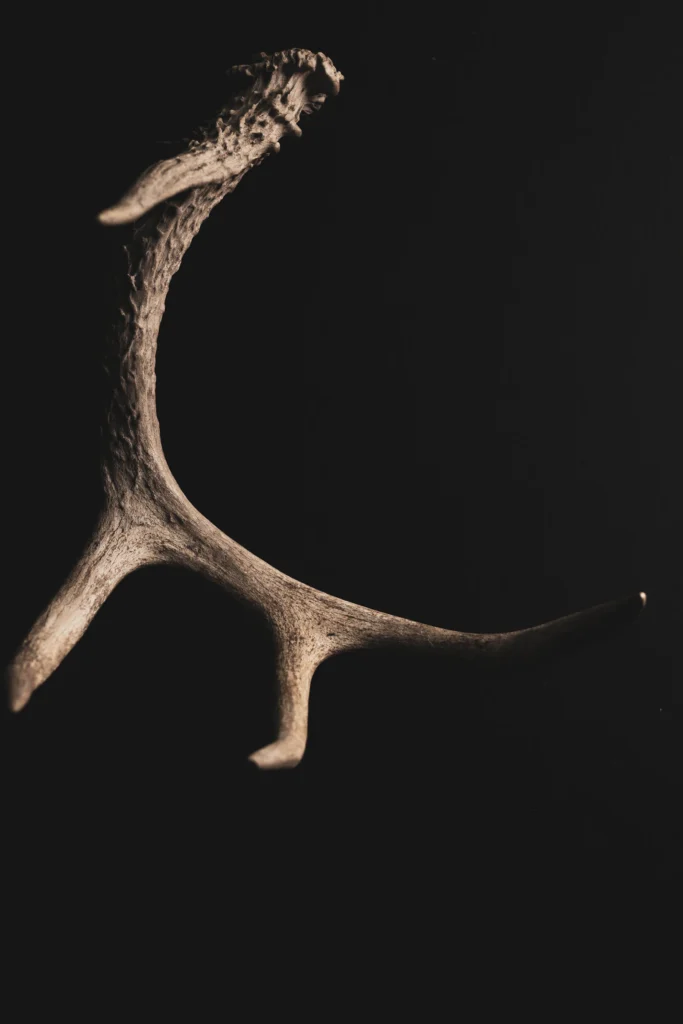
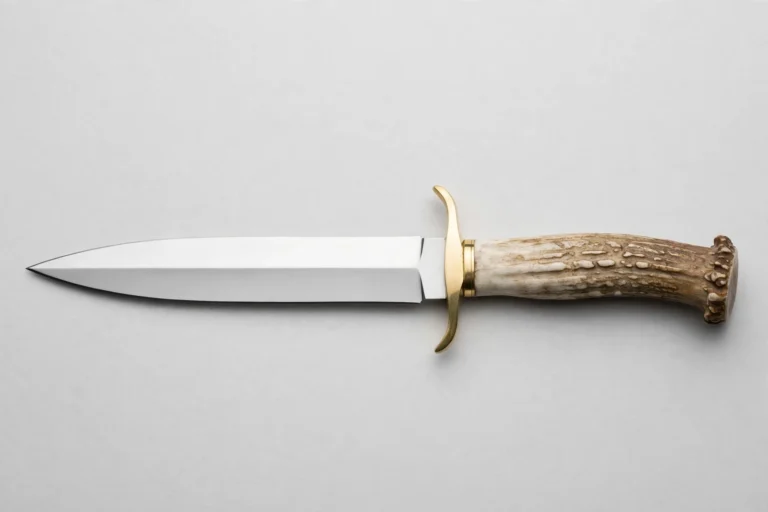
Deer antler, often called stag, is one of the best natural handle materials for outdoor knives. Its rough, knobbly surface gives an excellent grip even in a bloody or wet hand, it is very tough, and no two pieces look alike. It suits hunters perfectly. The Stag-Royale Dagger pairs a natural deer antler handle with an 8 inch (20 cm) stainless steel blade, 13 inches (33 cm) overall.
Horn
Cow and buffalo horn polish to a glossy black, brown or honey colour and feel smooth and comfortable. Horn is made of keratin, like fingernails, so it can absorb water and move slightly. Avoid soaking and very dry heat, and give it an occasional light oil or wax.
Synthetic materials: micarta and G10
Micarta
Micarta is made from layers of linen, canvas or paper soaked in resin and pressed under heat. It is tough, practically waterproof and stays grippy when wet; linen and canvas micarta even become slightly grippier as the surface wears. It is a favourite for bushcraft, hunting and professional kitchen knives. The Sovereign Tracker combines a black micarta handle with a 4.5 inch (11 cm) Damascus steel blade, 9 inches (23 cm) overall.
G10
G10 is a fibreglass laminate in epoxy resin. It is extremely strong, light, and unaffected by water, sweat, blood or temperature changes. It is usually given a textured surface for grip. G10 looks modern rather than traditional, and is ideal for knives used in harsh, wet conditions, such as fishing and boating.
Which handle for which knife?
- Hunting and game processing: antler or micarta for grip with wet or bloody hands.
- Bushcraft and camping: micarta, G10 or oiled hardwood. See our bushcraft knife guide.
- Kitchen: riveted wood for a classic feel, micarta for the lowest maintenance. Our chef knife set guide compares them.
- Collecting and display: antler, horn, bone and fine woods show off hand craftsmanship.
- Heavy chopping: a material that absorbs shock, such as wood or micarta, is kinder to your hand. Bone handles also feature on traditional kukris like the Wolf-Crescent Kukri Knife.
Caring for each material
- Wood: wipe dry; apply food-safe mineral oil or a little beeswax every few months.
- Bone and horn: keep out of soaking water and away from radiators; a little oil or wax keeps them from drying out.
- Antler: wipe clean; an occasional coat of wax keeps it looking good.
- Micarta and G10: wash with soap and water; nothing else needed.
- All handles: never put knives in the dishwasher, where heat and detergents damage natural materials and the steel.
For the sheath, see our guide to leather sheath care.
- Sovereign Tracker Knife: black micarta handle, 4.5 in (11 cm) Damascus blade.
- Stag-Royale Dagger Knife: natural deer antler handle, 8 in (20 cm) stainless blade.
- Wolf-Crescent Kukri Knife: bone handle, 9 in (23 cm) Damascus kukri blade, 14 in (36 cm) overall.
Frequently asked questions
What is the best knife handle material?
For practical outdoor use, micarta and G10 are hard to beat: tough, waterproof and grippy. For traditional character, antler is the best natural material for grip and durability.
Is micarta better than G10?
Both are excellent. Micarta feels warmer and more organic and gets grippier with wear; G10 is slightly tougher and completely unaffected by water and temperature.
Are antler knife handles durable?
Yes. Antler is very tough and naturally textured, giving a secure grip. It can crack if dropped on rock or kept in very dry heat, so treat it with reasonable care.
Do wooden knife handles get damaged by water?
They can if left wet or soaked. Wipe wooden handles dry after use and oil them occasionally to keep them sealed.
Can I put a knife with a bone or wood handle in the dishwasher?
No. Dishwasher heat and detergent can crack and dry out natural handles and damage the blade. Wash by hand and dry straight away.