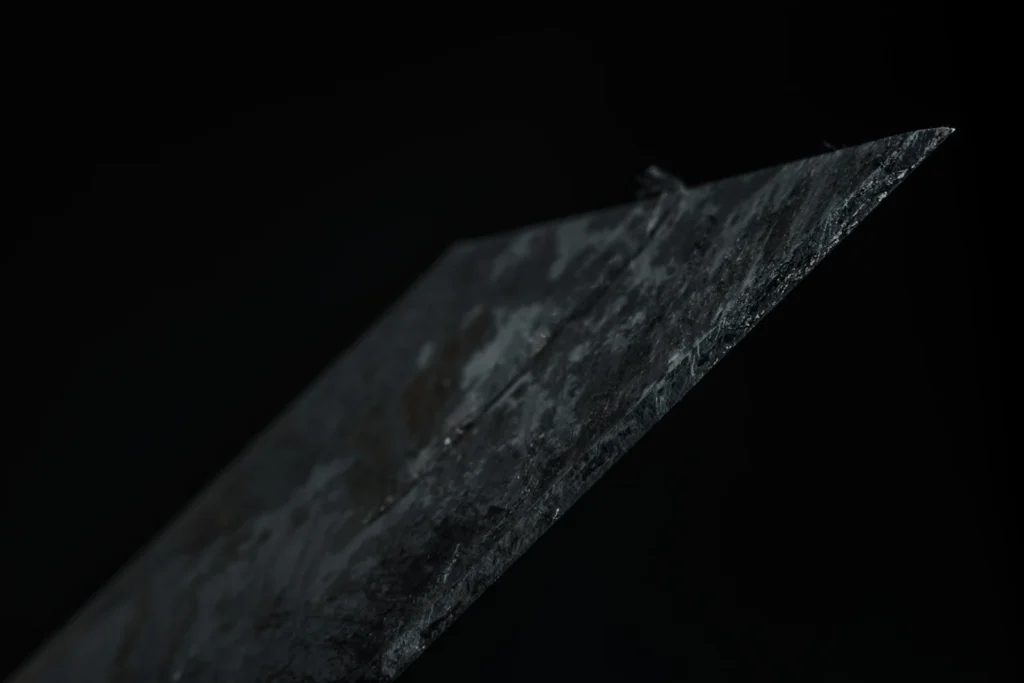
Quick answer: there is no single best knife steel, only the best one for your use. High-carbon steel is tough and very easy to sharpen but rusts if neglected. Stainless steel resists rust and needs the least care. D2 tool steel holds an edge for a long time and resists stains well, but takes more effort to sharpen. Damascus is layered (pattern-welded) steel prized for its unique pattern; it is usually high-carbon, so it cuts beautifully and needs carbon-style care.
Steel names fill knife forums and product listings, and the arguments can get technical fast. You do not need a metallurgy degree to choose well. You only need to understand a few trade-offs, because every steel balances them differently.
Four properties that matter
- Edge retention: how long the knife stays sharp with use. Harder, more wear-resistant steels last longer between sharpenings.
- Toughness: how well the blade resists chipping or snapping when you chop, baton or twist. Toughness and hardness pull in opposite directions.
- Corrosion resistance: how well the steel resists rust and staining. Chromium is the main ingredient that helps here.
- Ease of sharpening: how quickly you can restore an edge on a stone. Very wear-resistant steels take longer.
Heat treatment matters as much as the steel itself. A well heat-treated simple steel will outperform a premium steel that was treated badly, which is why the skill of the maker counts.
Damascus vs D2 vs carbon vs stainless: compared
| High-carbon | Stainless | D2 tool steel | Damascus | |
|---|---|---|---|---|
| Edge retention | Good | Fair to good | Very good | Good (depends on the steels layered) |
| Toughness | Very good | Good | Fair to good | Good |
| Rust resistance | Low | High | Medium to high (“semi-stainless”) | Low to medium |
| Ease of sharpening | Very easy | Easy | Harder | Easy |
| Looks | Plain, patina over time | Plain and bright | Plain, satin | Unique layered pattern |
| Good for | Bushcraft, choppers, swords | Wet climates, fishing, low fuss | Hard-use hunting and EDC knives | Hunting, kitchen and collector blades |
High-carbon steel
Simple high-carbon steels, like the well-known 1095 family, contain plenty of carbon and very little chromium. They take a very keen edge, are tough enough for chopping and batoning, and sharpen quickly even on a basic stone. The downside is rust: leave a carbon blade wet overnight and you will see orange spots. Most owners let a grey patina develop, which slows rust. Carbon steel is the traditional choice for bushcraft knives, kukris and functional swords. Our bushcraft knife guide explains why outdoor users love it.
Stainless steel
Stainless steels contain enough chromium (usually 12% or more) to resist rust far better than carbon steel. That makes them ideal for fishing, boating, humid climates and anyone who wants a knife that tolerates neglect. Quality varies widely: some stainless steels are soft and lose their edge fast, while premium grades are excellent. A good stainless hunting knife such as the Iron Reign Bowie Knife gives you a 7 inch (18 cm) blade that shrugs off rain and blood, with a deer antler handle, 12 inches (30 cm) overall.
D2 tool steel
D2 was developed as an industrial tool steel for dies and cutters. It is high in carbon and has around 11 to 12% chromium, just short of the usual stainless threshold, which is why it is called semi-stainless. It holds an edge noticeably longer than simple carbon steel and resists stains well. The trade-offs are slightly lower toughness and slower sharpening, so a diamond or good-quality stone helps. D2 suits hunters who process a lot of game and do not want to stop and resharpen.
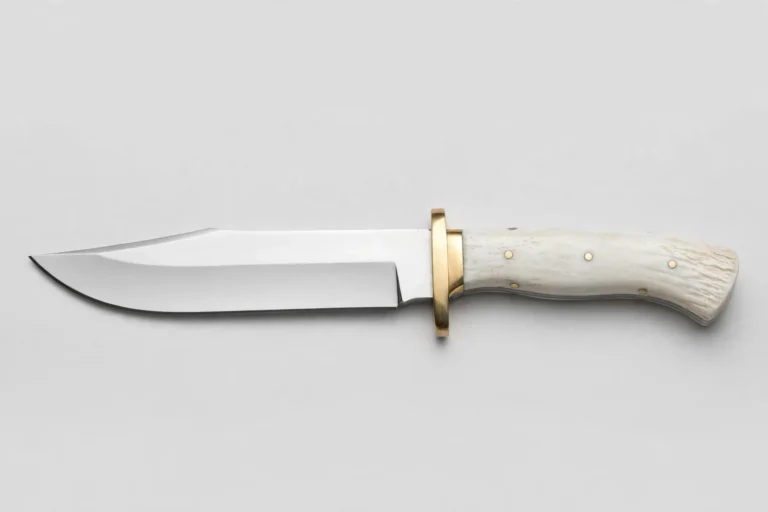
The Karakoram Bowie is a good example: a 7 inch (18 cm) D2 tool steel blade with a bone handle, 12 inches (30 cm) overall, supplied with a leather sheath.
Damascus steel
Modern Damascus is pattern-welded steel: layers of two different steels forged together, folded and then etched in acid to reveal the contrast. Most knife Damascus combines high-carbon steels, so it sharpens easily and cuts very well, but it needs drying and occasional oiling like carbon steel. Its real appeal is the pattern: no two blades are the same. To learn how real Damascus is made and how to spot printed or etched fakes, read our Damascus steel buyer’s guide.
The Pathfinder Bowie Knife shows what hand-forged Damascus looks like on a working knife: an 8 inch (20 cm) blade with a bone handle, 13 inches (33 cm) overall.
Which steel for which job?
- Hunting and processing lots of game: D2 for edge life, or Damascus for performance with character.
- Bushcraft, camping and chopping: high-carbon steel for toughness and easy field sharpening.
- Fishing, boating and wet climates: stainless steel.
- Kitchen: Damascus or carbon for sharpness, stainless for low maintenance (see our chef knife set guide).
- A blade to admire as well as use: Damascus.
Whatever you choose, browse our bowie knives to see the same classic shape in stainless, D2 and Damascus steel side by side.
Frequently asked questions
Is D2 steel better than Damascus?
D2 usually holds an edge longer and resists rust better. Damascus is easier to sharpen, is often tougher, and has a unique pattern. Neither is simply better; it depends on whether you value edge life or character and ease of sharpening.
Does Damascus steel rust?
Most Damascus is made from high-carbon steels, so yes, it can rust if left wet. Dry it after use and wipe on a thin film of oil now and then.
Is carbon steel better than stainless steel?
Carbon steel is generally tougher and easier to sharpen; stainless steel needs much less care. For outdoor chopping many people prefer carbon, and for wet conditions stainless.
Is D2 a stainless steel?
Not quite. D2 has around 11 to 12% chromium, slightly below the usual stainless threshold, so it is called semi-stainless. It resists staining well but can still rust if neglected.
What is the easiest knife steel to sharpen?
Simple high-carbon steel and most Damascus are the easiest. Very wear-resistant steels such as D2 take longer and benefit from diamond stones.