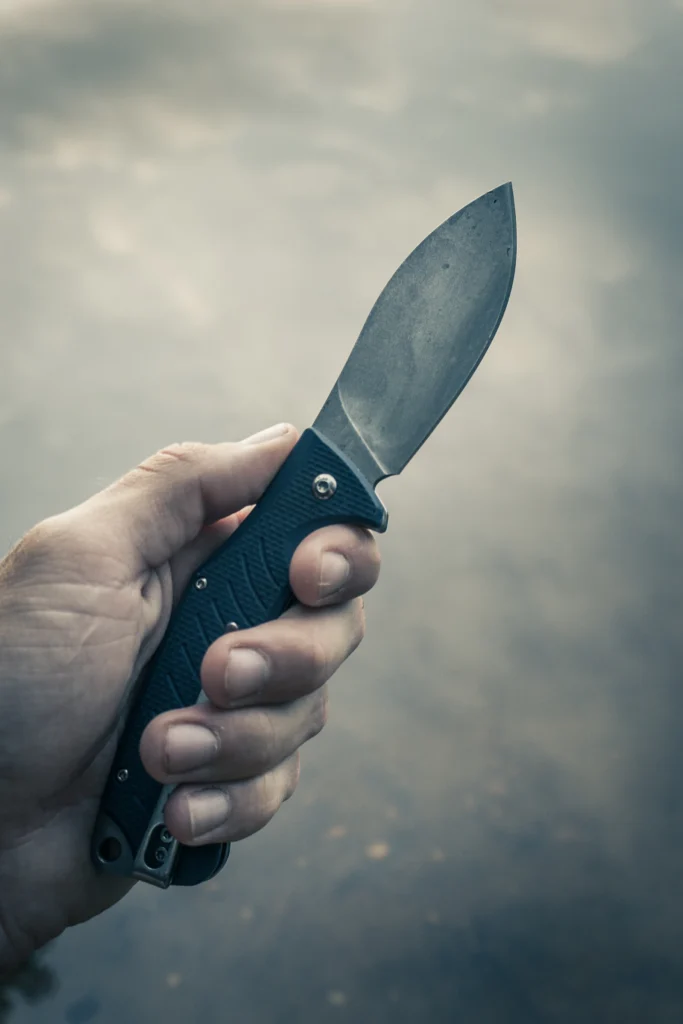
Quick answer: a good bushcraft knife is a sturdy fixed blade of about 4 to 5 inches (10 to 13 cm), thick enough to baton small logs, with a comfortable handle that grips when wet and a secure sheath. Carbon steel is the classic choice because it is tough, easy to sharpen in the field and throws sparks from a ferro rod; stainless steel needs less care in wet climates. Longer blades chop better but are harder to control for carving.
Bushcraft is about living comfortably outdoors with simple tools, and for most people the knife is the most important of them. From the forests of Maine and the Appalachians to the Lake District, the Black Forest and the Swedish lakes, the same handful of jobs come up again and again. Choose a knife for those jobs rather than for looks or size.
What a bushcraft knife actually has to do
- Feather sticks and kindling: shaving thin curls from dry wood to catch a spark.
- Batoning: striking the spine with a stick to split small logs and get to the dry wood inside.
- Carving: tent pegs, pot hangers, spoons and notches for shelters.
- Food preparation: cutting vegetables, cheese and meat, and cleaning fish.
- Cordage and general camp tasks: cutting rope, tarp lines and packaging.
None of these needs a huge blade. They need control, a strong blade, and an edge you can keep sharp.
Blade length: why 4 to 5 inches
A blade of 4 inches (10 cm) is the sweet spot for carving and feather sticks, because your hand is close to the work. A 5 inch (13 cm) blade gives a little more reach for batoning larger pieces and some light chopping. Above about 6 inches (15 cm), knives start to behave like small choppers: good for limbing, clumsier for fine work. If you want serious chopping, pair a medium knife with a dedicated chopper, as we explain in kukri vs machete vs hatchet.
Blade thickness matters as much as length. A thicker spine survives batoning and twisting, while a very thin blade slices better but is easier to damage.
Carbon or stainless steel?
| Carbon steel | Stainless steel | |
|---|---|---|
| Toughness | Very tough, flexes rather than chips | Good |
| Field sharpening | Very easy on a stone or even a river rock | Easy, takes slightly longer |
| Ferro rod and flint | The spine throws sparks well | Works with a ferro rod |
| Rust | Rusts if left wet; develops a grey patina | Resists rust much better |
| Best for | Traditional bushcraft, dry or cold climates, people who enjoy maintenance | Wet climates, coastal and boat trips, low-fuss carry |
If you go carbon, wipe the blade dry after use and give it a thin coat of oil. A dark patina will form over time and actually helps protect the steel. Our carbon steel care guide explains how to remove rust spots if they appear.
Handle and sheath
You will hold a bushcraft knife for long stretches in cold, wet or muddy conditions, so comfort beats appearance. Look for a handle without sharp corners, long enough for your whole hand, with a slight swell that stops your hand sliding forward. Wood feels warm and grips well; synthetic handles such as G10 are practically waterproof and very tough; horn and antler look beautiful and grip well too.
The sheath should hold the knife securely when you bend, climb or kneel. All of our tracker knives come with a leather sheath. Never store the knife wet inside it.
What is a tracker knife?
“Tracker knife” is used for a broad family of sturdy, medium-length fixed blades built for outdoor camp work. They sit between a small skinner and a big bowie: big enough to baton and do light chopping, small enough to carve. In our range, tracker knives have 4 to 5 inch (10 to 13 cm) blades and 8 to 10 inch (20 to 25 cm) overall lengths, in carbon, stainless and Damascus steel.
Three tracker knives compared
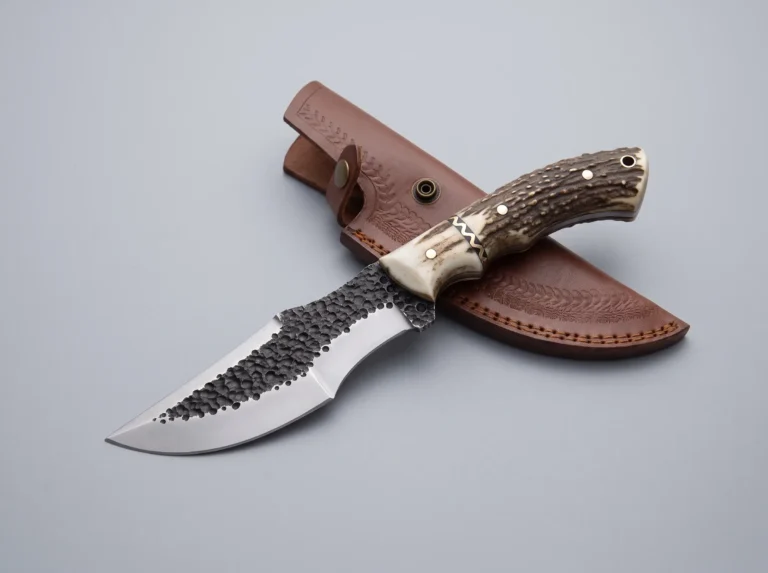
- Shadow Ridge Tracker Knife: a compact 4 in (10 cm) carbon steel blade with a riveted wooden handle, 8 in (20 cm) overall. A classic, traditional bushcraft set-up.
- Obsidian Trail Tracker Knife: a longer 5 in (13 cm) carbon steel blade with a stag horn handle, 10 in (25 cm) overall, for batoning and heavier camp tasks.
- Phantom Trail Tracker Knife: a 4 in (10 cm) stainless steel blade with a green G10 handle, 8 in (20 cm) overall. The low-maintenance choice for rain, boats and coastal trips.
If you want one knife for most trips, the Obsidian Trail Tracker gives the most versatility. If you mainly carve and make fire, the smaller Shadow Ridge Tracker is easier to control. Compare every tracker knife in the collection.
Please check your local laws before carrying a fixed blade. In the UK, for example, you need a good reason, such as taking it to a camping or bushcraft trip, and it should be carried in its sheath inside your pack.
Frequently asked questions
What is the best blade length for a bushcraft knife?
About 4 to 5 inches (10 to 13 cm). That is long enough for batoning small logs and short enough for precise carving and feather sticks.
Is carbon steel good for bushcraft?
Yes. Carbon steel is tough, easy to sharpen in the field and works well with a ferro rod. It does need to be dried and oiled to prevent rust.
Can you baton with a tracker knife?
A sturdy fixed-blade tracker knife can baton small pieces of firewood. Use a wooden baton, split wood no thicker than the blade is long, and never strike the handle.
Is a stainless steel bushcraft knife a bad idea?
No. Stainless steel is a sensible choice in wet or coastal conditions because it needs far less care. It sharpens a little more slowly than carbon steel.
Is a bushcraft knife the same as a survival knife?
They overlap. Bushcraft knives focus on carving, fire-making and camp work, while survival knives are often larger and built for heavier abuse. A medium tracker knife covers most of both.